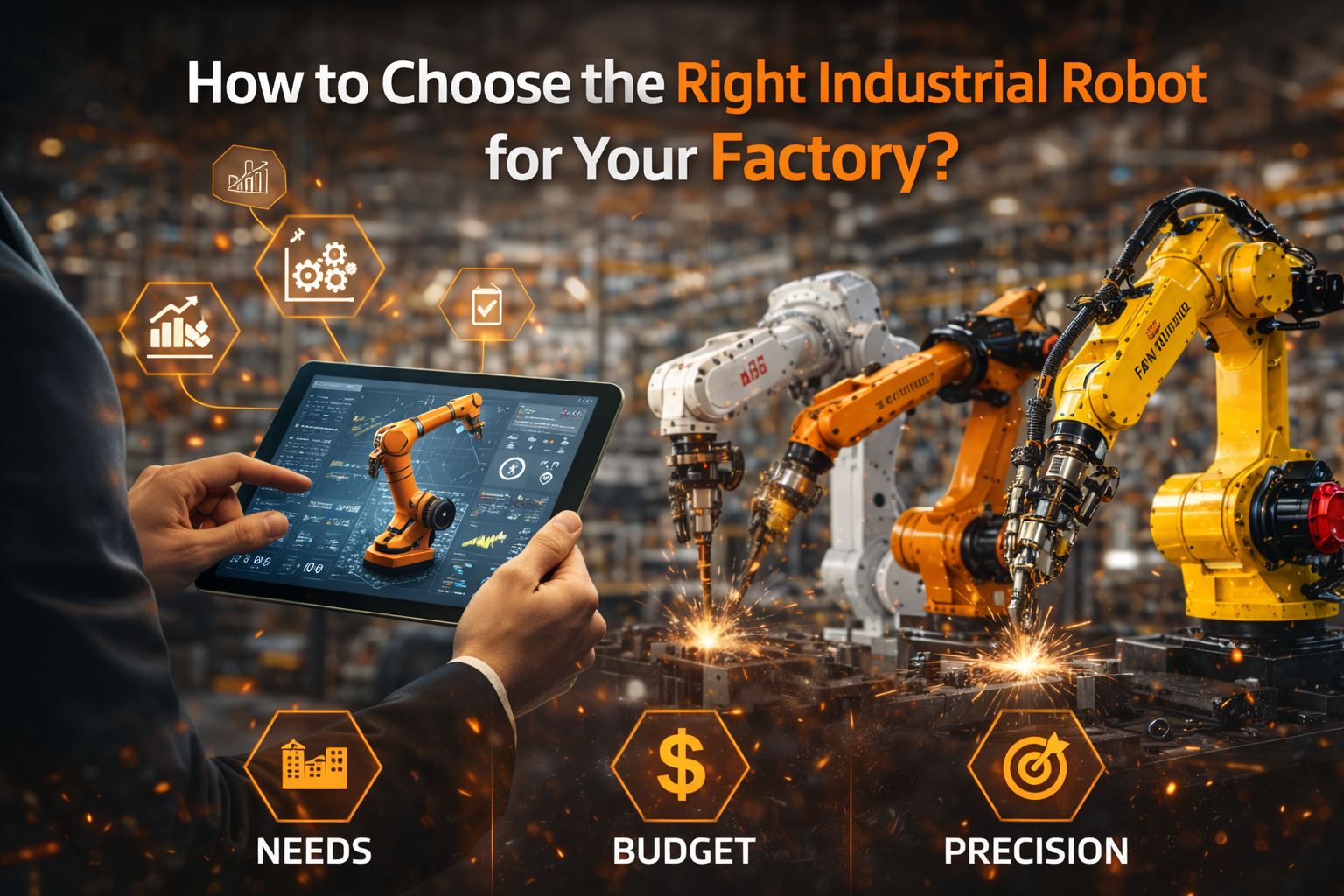
How to Choose the Right Industrial Robot?

Summary

Choosing an industrial robot is a critical decision that affects your business’s production, quality, and profitability. With a wide range of brands and models on the market, it is important to understand how to choose correctly—not only by price, but by performance, process compatibility, and long-term service. In this guide, we will go step by step through everything you need to check before making a decision.

Step 1 – Choose the Right Brand (and Don’t Compromise)

The first and most important step:

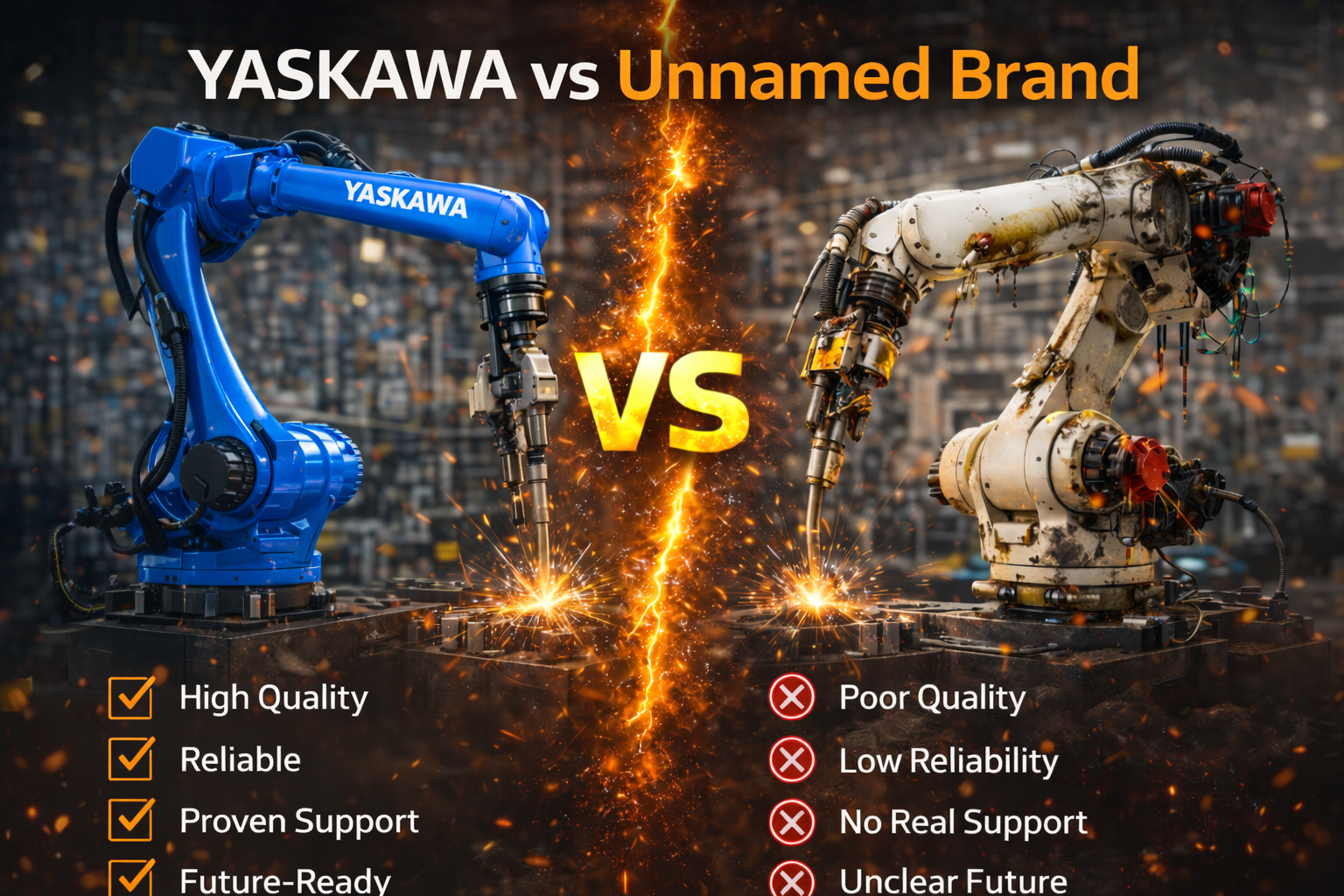
👉 Choose a recognized, stable brand with proven experience

For example:

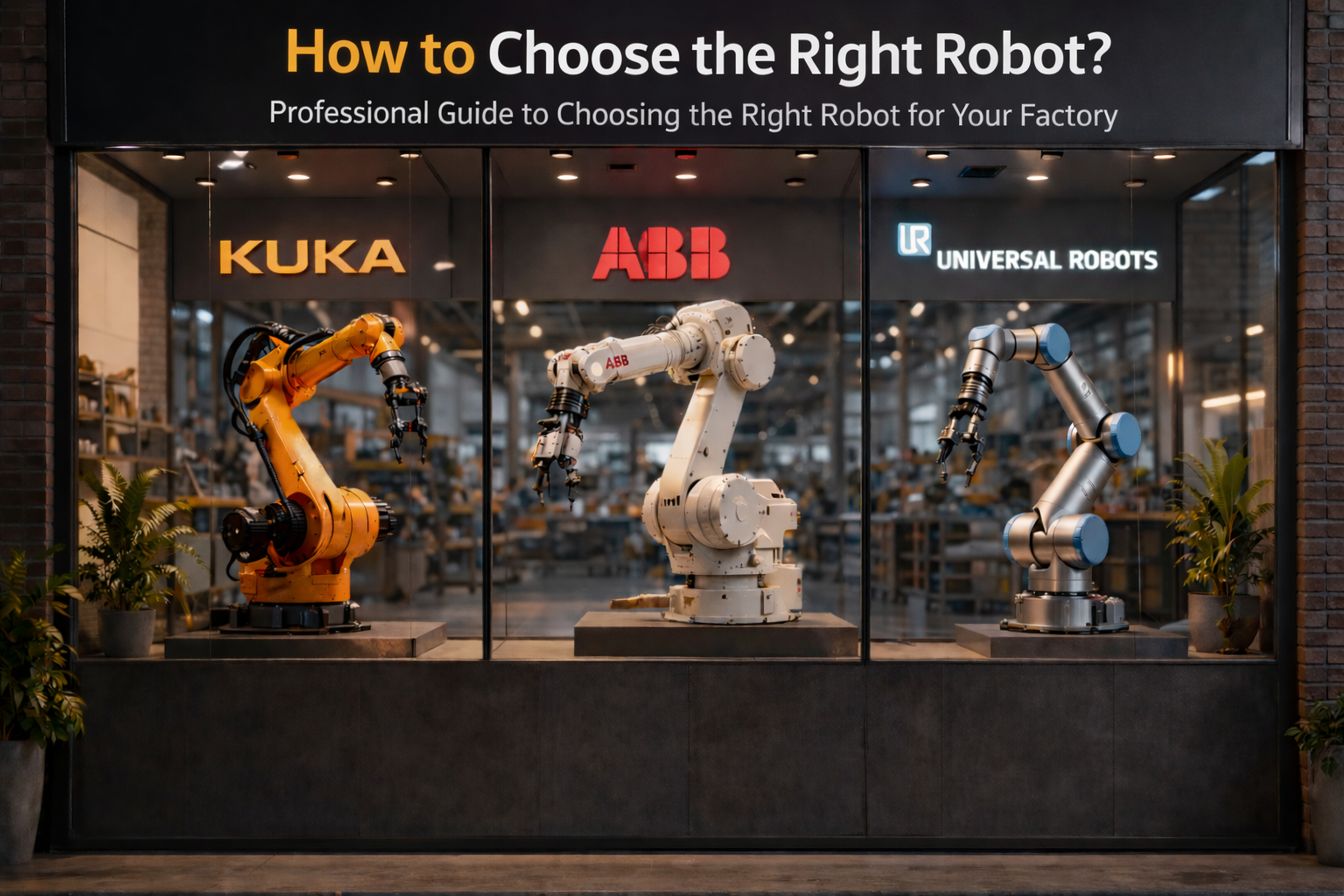
  • KUKA
  • ABB
  • Fanuc
  • Yaskawa

👉 Why is this critical?

✔ Long-term reliability
✔ Parts availability
✔ Future developments
✔ Technical support

❗ Important to understand:
There are many new companies on the market—some have been around for less than a year.
There is no guarantee they will be here in a year.


Step 2 – Payload

One of the most common mistakes:

👉 Choosing a robot based on product weight alone

But in practice, you need to calculate:

✔ Product weight
✔ Gripper weight
✔ Accessories (cables, sensors, etc.)

👉 For example:
5 kg product + 3 kg Gripper = at least a 10 kg robot

✔ Always leave a safety margin


Step 3 – Operating Speed (Cycle Time)

👉 The real question:

How fast does the operation need to be performed?

✔ Pick & Place
✔ Assembly
Welding
✔ Packaging

👉 A robot that is too slow = reduced throughput

Therefore, it is important:
✔ To match the robot to the production rate
✔ To check cycle times

Step 4 – Work Area (Reach)

Every robot is limited by its working range.

👉 You need to check:

✔ Reach
✔ Working height
✔ Range of motion

👉 And also:

✔ Physical constraints in the facility
✔ Surrounding equipment
✔ Safety

❗ Common mistake:
A robot that cannot reach a critical point in the process.


Step 5 – Space Constraints and Environmental Planning

Before choosing a robot:

👉 You must understand the environment

✔ Cell size
✔ Safety fencing
✔ Equipment placement
✔ Maintenance access

👉 A robot is not just an arm—it is a complete system


Step 6 – Service and Support (Critical!)

One of the most important parameters:

👉 Is local service available?

✔ Response times
✔ Technical support

👉 In a facility—every hour costs money


Step 7 – Who Are You Dealing With?

Pay close attention to this 👇

👉 If you are only speaking with a salesperson—that is not enough

A professional company will work as follows:

✔ Salesperson
✔ Application engineer
✔ Technical team

👉 Why is this important?

✔ Proper fit
✔ Error prevention
✔ A real solution—not just a sale


Step 8 – Guidance in Robot Selection

A serious company:

👉 Will not sell you “what’s in stock”
👉 But will help you choose correctly

✔ Needs assessment
✔ Simulation
✔ Process compatibility

👉 This is the difference between:
A product ❌
A solution ✔


Common Mistakes in Robot Selection

❌ Choosing by price alone
❌ Not calculating the Gripper
❌ Ignoring the work area
❌ Working with a company without service
❌ Listening only to sales


💡 The Bottom Line

✔ Choose a recognized brand
✔ Calculate payload correctly
✔ Match to speed requirements
✔ Understand the environment
✔ Work with a professional company

👉 This is what makes a successful project


FAQ – Frequently Asked Questions

How to Choose the Right Robot?

Choose based on actual needs, not price alone—including weight, speed, and environment.


Is Every Robot Suitable for Every Facility?

No.
Every process requires precise matching.


What Is Most Important in Selection?

Service + proper fit + reliable brand.


Does All-Robots Help with Robot Selection?

Yes, absolutely.
We guide our clients professionally and always accompany and recommend the right model.

How Much Does a Collaborative Robot and Industrial Robot Cost
How much does a robot cost

Related Posts

Chinese Robot or Established Branded Robot – Which Is Better?

Chinese Robot or Established Branded Robot

Today’s robotics market features dozens of brands – from leading international companies to new manufacturers that appear and disappear rapidly. The choice between an inexpensive robot from an unknown brand and an industrial robot from a leading company can directly impact your production, reliability, and business future.

Read More