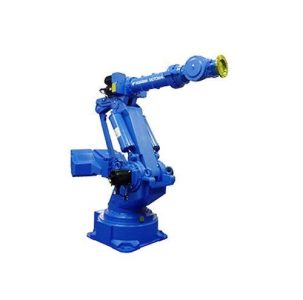
Industrial robots are transforming the way factories and companies operate, enabling smart automation, high efficiency, and significant cost savings. On this page, you will find a wide range of robots, collaborative robots, and advanced automation systems suitable for industry, logistics, and manufacturing.
Industrial robots form the foundation for advanced automation in factories, warehouses, and production lines. Today, the integration of industrial robots, collaborative robots, and mobile robots (AMR and AGV) enables the creation of smarter, more efficient, and more flexible systems than ever before.
Industrial robots are designed for exceptionally high performance. They execute repetitive operations such as welding, assembly, cutting, and material handling with high precision and speed. Therefore, they are widely used in industries such as automotive, electronics, and heavy manufacturing.
Collaborative robots, on the other hand, are designed to work alongside humans. They are equipped with advanced sensors that enable safe operation in shared environments. Additionally, they are easy to program and implement, making them an excellent solution for small and medium-sized businesses looking to enter the world of automation.
Mobile robots (AMR and AGV) add another layer of efficiency. They can move autonomously within a factory or warehouse, transport goods, support production lines, and improve workflow. As a result, it is possible to build a complete automation system that connects all stages of the process.
The use of robots provides significant advantages:
Additionally, robots enable employees to focus on more complex and creative tasks instead of repetitive work.
Modern robots are designed to integrate easily with existing systems. Industrial robots require precise programming, while collaborative robots offer simple and intuitive interfaces.
Additionally, accessories such as grippers, cameras, and sensors can be integrated, enabling complete customization for any task.
Robots are used in a wide range of fields:
Additionally, robots can also be found in laboratories, advanced industries, and complex work environments.
At All-Robots, we provide not just robots—but complete solutions.
We specialize in adapting robots to real-world needs, including planning, integration, and implementation. We work with leading brands such as ABB, KUKA, Fanuc, and others, providing solutions for all levels of complexity.
Additionally, we support the client from the specification stage through to full system deployment.
What is the difference between a collaborative robot and an industrial robot?
Collaborative robots work alongside humans and are safer, while industrial robots are faster and more powerful.
How much does an industrial robot cost?
The price varies depending on type, size, and application, and can range from tens of thousands of euros to hundreds of thousands.
How do you choose the right robot?
Factors to consider include payload, reach, type of work, and required level of precision.
Can a robot be integrated into an existing system?
Yes, modern robots are designed to integrate relatively easily with existing systems.