What Is Automation?
Automation is a process in which tasks previously performed by humans are executed by technological systems—such as robots, smart machines, control software, and logistics systems.
In industry, automation can include:
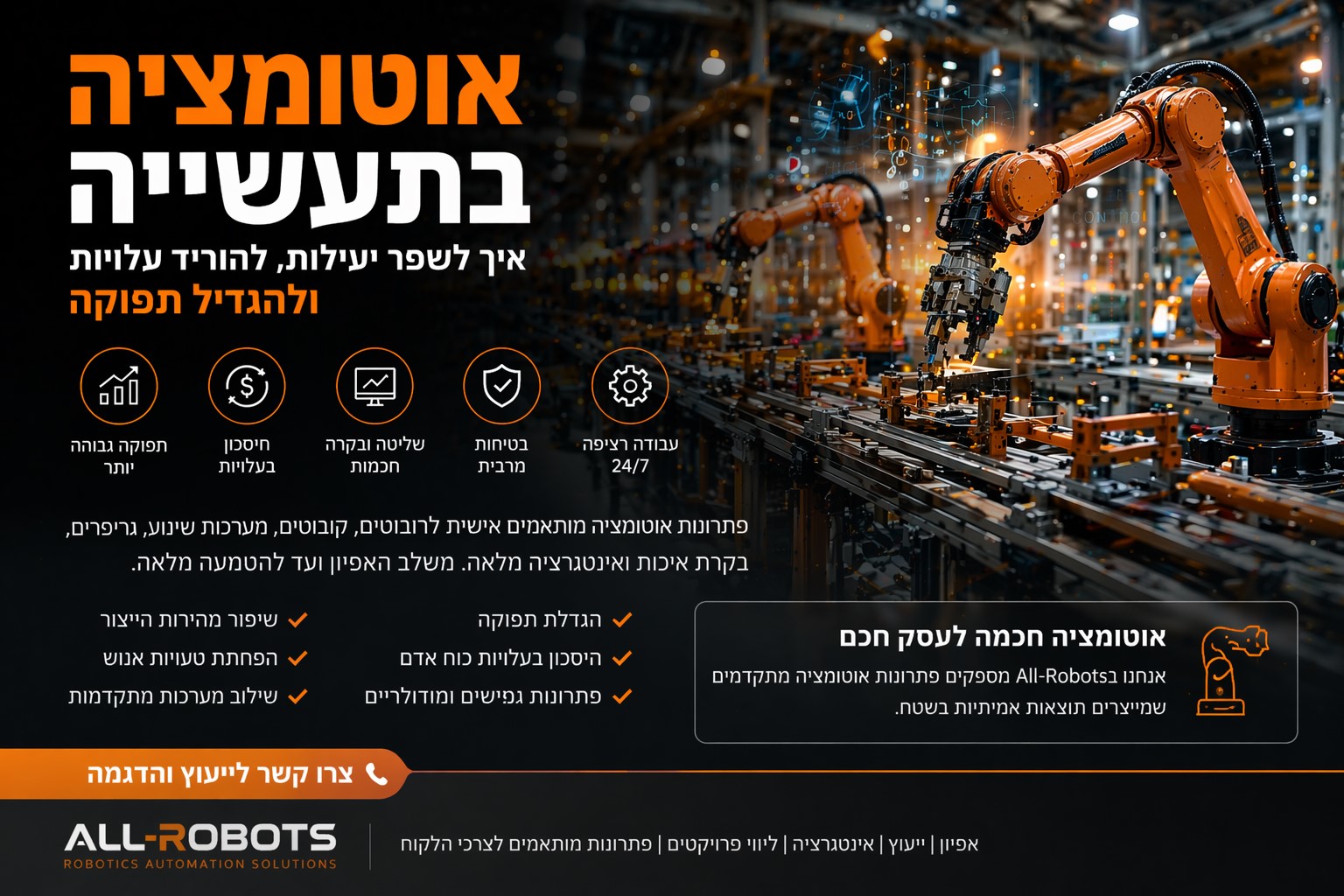
- Industrial robots for production lines
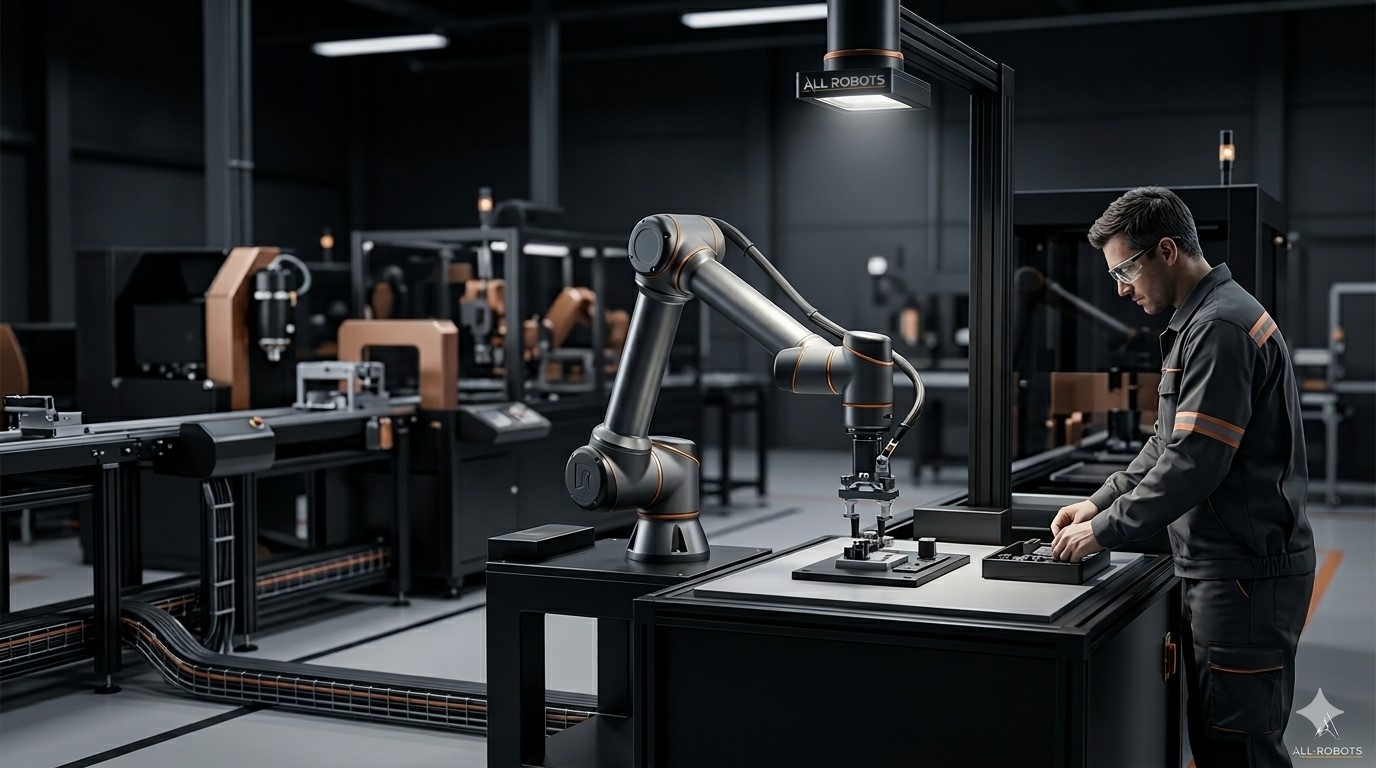
- Cobots for working alongside employees
- AMR and AGV systems for material handling
- Grippers and customized gripping systems
- Vision systems for quality control
Therefore, automation is not just a “robot”—it is an entire system working together.
Benefits of Industrial Automation
Automation offers significant advantages:
- Improved production speed
- Increased output
- Reduced human error
- Improved quality and precision
- Reduced labor costs
- Continuous 24/7 operation
- Stability in the production process
Additionally, automation allows employees to focus on more complex tasks instead of repetitive and exhausting work.
How Much Does Automation Cost?
The cost of automation varies greatly and depends on several factors:
- Project complexity level
- Type of robot (industrial / cobot / mobile)
- Need for custom gripper development
- Integration of vision systems
- Integration with existing systems
- Required safety level
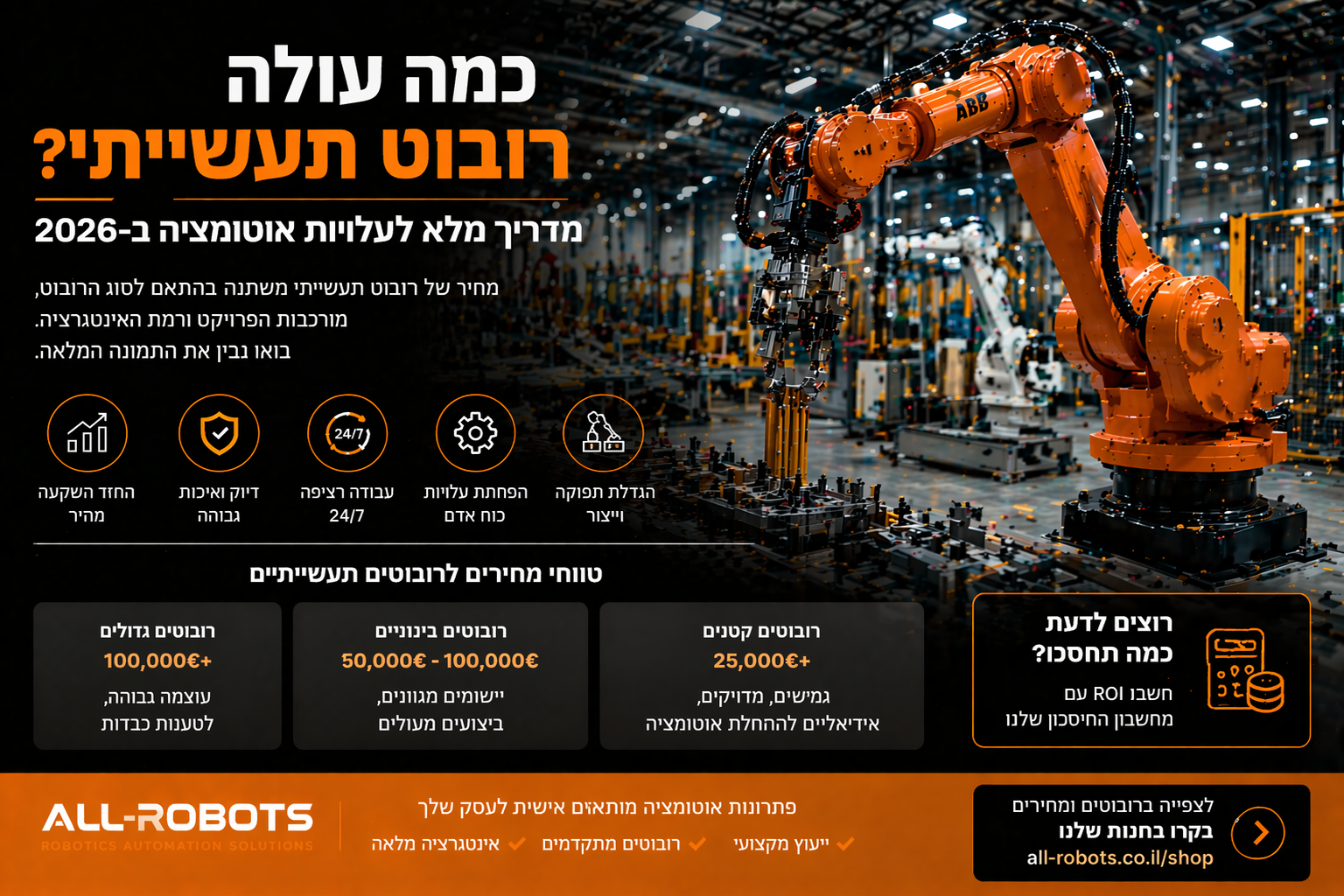
Generally, costs can be divided as follows:
- Simple solutions: Starting from a few thousand euros
- Medium-scale projects: Tens of thousands of euros
- Complex systems: Hundreds of thousands of euros or more
Therefore, it is important to understand that the cost is not just the “robot,” but the entire surrounding system.
Is It Worth Adopting Automation?
Not every process requires automation. However, there are situations where it becomes essential:
- Repetitive tasks
- Difficulty recruiting workers
- Demand for high quality
- Need to increase output
- Dangerous or physically demanding processes
On the other hand, if the process is highly variable or involves small quantities, full automation may not be the right solution.
Therefore, the decision should be based on economic and operational analysis.
How to Choose the Right Automation Solution?
To choose correctly, it is important to examine:
- The required task
- Product weight (payload)
- Working range (reach)
- Production rate
- Working environment
- Budget
Additionally, it is important to work with a professional who understands both robotics and integration.
Common Types of Automation
Industrial automation is divided into several types:
- Automation with industrial robots – for heavy-duty and high-speed projects
- Automation with cobots – for flexible projects
- Logistics automation – using AMR and AGV
- Integrated automation – combining multiple systems
The more integrated the system, the higher the efficiency that can be achieved.